Red Light vs. Infrared Therapy: What's the Difference?

Are you trying to work out the difference between red light vs. infrared therapy before you buy a device, or do you already own a light therapy mask and want to know what your red and near-infrared modes actually do?
Both are forms of light therapy, just different wavelengths that reach different depths of your skin. Visible red light works closer to the surface, while invisible near-infrared goes deeper. Most at-home masks, GlowUp™ included, now combine both in one session, so you don’t have to choose.
Key Takeaways
-
Red light is visible and works close to your skin's surface, where it's thought to support collagen and smoother-looking texture.
-
Near-infrared light is invisible and reaches deeper, where it's linked to calming redness and supporting your skin's natural repair process.
-
Deeper doesn't automatically mean better. The right wavelength depends on what you're treating, not just how far it travels.
-
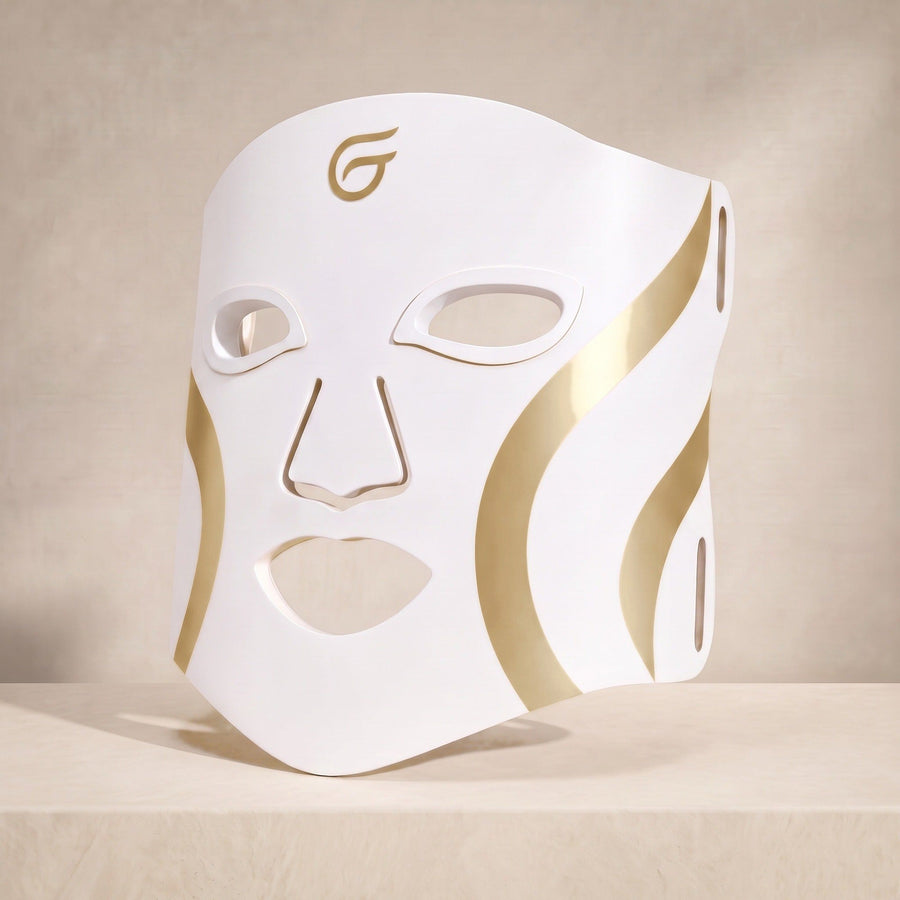
Many at-home devices, including the GlowUp™ LED Light Therapy Face Mask, combine red and near-infrared light in one session, so you get both without choosing.
How Light Therapy Works on Your Skin
Light therapy (also called photobiomodulation) uses specific wavelengths of light that your skin cells absorb. Studies on light therapy for skin suggests that extra energy may help support collagen and your skin’s natural repair process. The color of the light “decides” how deep it travels into your skin, which is where the difference between red and infrared LED starts.
Visible red light sits at one end of this range. Near-infrared sits just past it, invisible to the eye but still absorbed by your skin. Both can show up in the same device, often in the same session, but they're doing different jobs.
Red Light vs. Infrared Therapy: Side-by-Side Comparison
|
Red Light |
Near-Infrared Light |
|
|
Wavelength range |
Roughly 620–700nm |
Roughly 760–1000nm |
|
Visible or invisible |
Visible (you'll see a red glow) |
Invisible |
|
How deep it reaches |
Surface to mid-dermis |
Deeper into the dermis |
|
Heat output |
Minimal |
Minimal to mild |
|
Common skin benefits |
Texture, tone, fine lines |
Calming, deeper tissue support |
|
Typical devices |
LED masks, handheld wands |
LED masks, panels, some saunas |
Near-Infrared vs. Far-Infrared: Not All Infrared Is the Same
Near-infrared is the wavelength you'll find in most skincare devices, including LED masks, and it works alongside red light without generating noticeable heat.
Far-infrared is the longer wavelength used in infrared saunas, where the goal is whole-body heat rather than a skin-level effect.
If a product just says “infrared,” look for the wavelength on the spec sheet. Near-infrared sits roughly between 760 and 1000nm, while products built around heat are more likely to be far-infrared.

A Customer Favorite
GlowUp™: Clinic Tech, Home Routine
Our FDA-cleared mask uses 6 light therapy modes to diminish wrinkles, boost collagen, reduce sun damage, and fight acne, revealing a youthful glow. Powered by 288 diodes, it delivers targeted results with medical-grade LED technology.
Shop GlowUp™ LED Light Therapy Face MaskDoes Deeper Penetration Mean Better Results?
Not necessarily. A deeper wavelength is simply a different tool for a different job. Red light reaches the upper layers of the dermis, where collagen is made, which is why it’s the go-to for texture and fine lines. Near-infrared's deeper reach is what makes it useful for calming and tissue-level support, since that's a different layer doing different work.
Which Light Suits Your Skin Goals?
Your goal, more than the wavelength itself, is what should guide you here:
-
Overall tone and fine lines: Red light tends to be the better fit, since it works where collagen production happens.
-
Calming and redness: Near-infrared often does more of the work, reaching slightly deeper to support your skin's repair response.
-
A combined routine: Using both in the same session covers more ground than relying on either alone, which is exactly how most at-home masks are now built.
Why Many At-Home Masks Combine Red and Near-Infrared Light
Red and near-infrared light reach different depths, so pairing them lets one session work on more than one layer of your skin at once.
Red light reaches the upper dermis, where collagen is made, while near-infrared travels a little further to support calming and repair underneath. Because near-infrared gives off very little heat, the two can run together comfortably on a mask that sits close to your face.
Time is the other reason. Running two separate 10-minute sessions most evenings is a lot to keep up with, and a combined setting fits both into one. That’s why you’ll find combined modes across many at-home light therapy devices.
The GlowUp™ LED Light Therapy Face Mask, which is FDA-cleared, is one example. Its 6 light modes include red on its own, near-infrared on its own, and a combined red plus near-infrared setting, so you can use one wavelength when your skin needs something specific and both when you want broader support. It’s wireless and rechargeable, so a session fits into a quiet evening at home without you needing to stay near an outlet.
How to Add Light Therapy to Your Skincare Routine
A session takes about 10 minutes, so it can easily become a part of your evening routine. Here’s how to make the most of it:
-
Start with a clean, completely dry face.
-
Apply the Hydrate - Hyaluronic Acid Serum first if you want extra hydration underneath the light.
-
Place the mask and adjust the straps for a snug fit.
-
Hold the power button for two seconds and follow the voice guidance.
-
Let the default 10-minute session run, or press the power button again to extend it.
-
Use the remote's mode button to choose red, near-infrared, or the combined setting.
-
Afterward, apply the Restore - Peptide Serum, let it dry, and finish with your usual moisturizer.

A Customer Favorite
Firmer Days Start With Restore
This peptide serum stimulates collagen production to firm and tighten the skin while improving texture and elasticity. It helps soothe irritation, reduce inflammation, and brighten skin tone, making it ideal for restoring skin vitality and maintaining a youthful appearance.
Shop Restore - Peptide SerumSafety Tips Before You Start
-
Patch-test a new device on a small area first.
-
Stick to the recommended session length, especially on your first few tries.
-
Keep the eye pads in place throughout a session, since they’re there to cushion the skin around your eyes.
-
If you’re pregnant or managing a skin condition, check with your dermatologist before starting any new light therapy routine.
Frequently Asked Questions
What's the Downside of Red Light Therapy?
For most people, red light therapy is generally well tolerated, though you might notice mild, temporary redness occasionally. The bigger limitation is consistency: results tend to build gradually with regular use, not after a single session.
How Can You Tell If a Red Light Is Infrared?
You can usually tell by sight. Red light is visible as a red glow, while near-infrared isn't visible at all. A device's spec sheet or packaging should list the exact wavelength in nanometers if you want to confirm which one you're using.
Where Shouldn't You Use Red Light Therapy?
Avoid using light therapy directly over broken or irritated skin, and don’t stare into the LEDs. If you have an eye condition or take medication that makes you sensitive to light, check with your doctor first.
Can You Use an Infrared Sauna and Red Light Therapy Together?
Generally, yes, though they serve different purposes: a sauna targets whole-body heat, while red or near-infrared light therapy works at the skin level. If you use both, it's worth spacing them out rather than stacking them back-to-back.
How Long Does It Take to See Results From Red Light Therapy?
Timelines vary by person and by what you're using it for, but you’ll likely notice changes over several weeks of consistent use. Sticking with a regular routine tends to matter more than any single session.
Combining Red and Near-Infrared Light Gives Your Skincare Routine Deeper Reach
You don't have to pick a side between red light and infrared. They're built for different depths and different jobs, and a routine that uses both can give you more benefits from one session. When your mask handles that switch for you, light therapy becomes the easy part of your evening.
Explore the GlowUp™ LED Light Therapy Face Mask and find the combination that works for your skin.